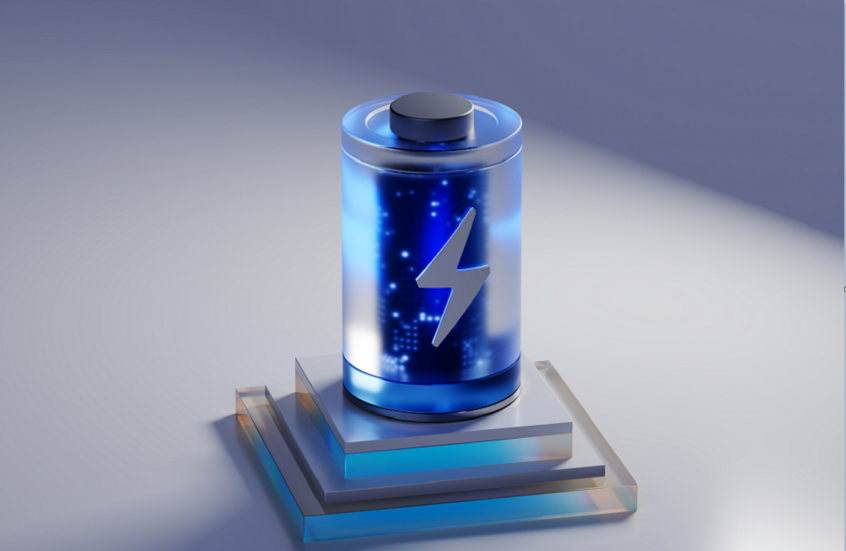
Chinese researchers have succeeded in developing a non-toxic water-based battery that could represent a qualitative leap in the field of energy storage, after demonstrating an operational capacity that could theoretically extend to about three hundred years, with higher levels of safety and sustainability compared to traditional batteries. The research team relied on manufactured covalent organic polymers, materials characterized by a stable structure and fine pores that help improve ion movement inside the battery, while being used as positive electrodes for magnesium and calcium ions. The researchers also developed a chemical compound with a honeycomb-like structure, which enhanced the battery's endurance and ability to operate for long periods. According to the study, the new battery is capable of withstanding about one hundred and twenty thousand charge and discharge cycles, a figure that exceeds more than ten times the lifespan of lithium-ion batteries currently used in energy storage systems. The researchers noted that the use of a neutral, non-toxic electrolyte solution contributed to raising the battery's efficiency and reducing risks of corrosion or chemical decomposition, pointing out that some of the materials used in its manufacture are even used in the food industry, making its disposal safer for the environment. Although water-based batteries still have lower energy storage capacity compared to lithium-ion batteries, researchers hope that the new technology will contribute to developing safer and more sustainable energy storage systems for future applications, especially in large electrical grids.
a
admin
Editor at Dijlah Point News, writing about Technology.
You Might Also Like

Technology
A New Medical Revolution.. Is Artificial Intelligence Approaching the Point of Surpassing Doctors?
30 Apr 2026
Technology